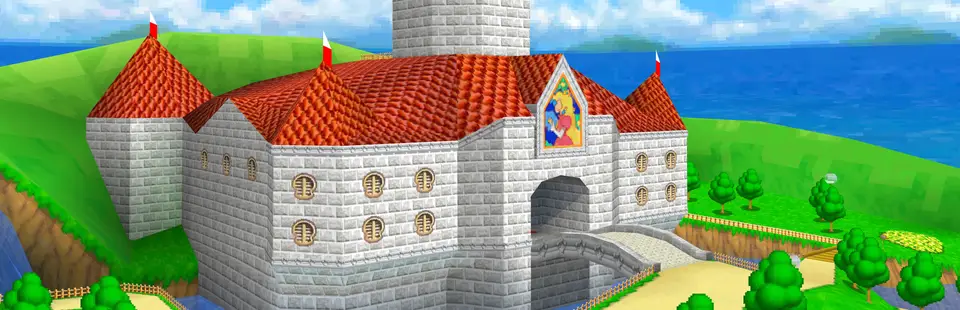

Super Mario 64 DS
Port nativo de Super Mario 64 DS para PC.
Super Mario 64 DS
Port nativo basado en matty45/sm64ds-decomp.
README del repositorio
Super Mario 64 DS Enhanced PC Port
An unfinished, experimental native Windows PC port, based on tangosdev/sm64ds-decomp. This repository contains the current development source. It is not a complete game release, and planned features are not promises of current functionality.
The native game uses recovered game code and a Windows hardware layer. It requires your own unmodified European Rev 0 cartridge dump. No ROM, extracted game assets, personal saves, or proprietary compiler is included here.
After assembling a native kit with your ROM, use PlayWithAudio.cmd to enable
the experimental native audio, or Play.cmd for the existing launch behavior.
Audio listening accuracy and complete gameplay remain unverified.
Current state
- Native attacking books and hidden book generators now use their original profiles. Selected muted tests cover all four corridor generators firing, one attacking book's activation/damage and Mario defeating it for a blue coin worth five coins. Original course exit/re-entry restores fresh book instances; the selected book can be defeated and collected again. Other placements, characters and repeated corridor firing remain unverified.
- Native Boo, Big Boo, bookshelf and book-switch factories load their original resources. Selected muted tests verify the five-Boo prerequisite sequence, Big Boo defeat and Star spawn, and a separate three-book puzzle opening. The original courtyard entrance-Boo/cage route and course re-entry now pass with an isolated prerequisite save. The bookshelf resets closed with all three switches restored. These are selected diagnostic checks, not complete campaign acceptance.
- Native Mad Piano and haunted chairs now spawn and render. Selected muted tests verify piano attacks, damage, linked-chair tipping, safe room-door escape, course re-entry with fresh actors and a second piano encounter. An unlinked chair jumps, pursues and breaks with original wood/dust effects. That stationary chair replay later dies; safe escape and respawning the destroyed chair remain unverified. Other placements/courses remain open.
- Native falling blocks and the original spinning floor now have selected
Mario checks in Luigi's ghost-house maze. The block receives real player
contact, shakes, drops and disables collision; normal ledge input restores
Mario to the bank. The spinning floor renders, rotates and supports him.
Yoshi, Mario, Luigi and Wario each cross the selected seven-tile row in both
directions with grounded contact on every tile. The group resets after outward
crossing; each character returns safely. Each also passes the original room
reset door and a full scene reload, then crosses again on newly created tiles.
This uses prepared diagnostic saves, not earned campaign entry. Other courses
and placements remain unverified;
see
port/docs/native-falling-block-and-spinning-floor-2026-10-27.txt. - The original level46 tilting trapdoor (profile160) now receives a real native
long-jump landing, tilts, settles naturally, and allows a safe jump back to
solid ground in a muted Wario replay. This is an isolated diagnostic route;
earned course entry and other variants/placements remain unverified.
The recovered staircase65 factory creates all three original steps in
level12 missions 1 and 2. Muted tests verify all three render, child links,
contact on all three steps and a jump onto the upper landing. Boss-triggered rise has separate selected runtime evidence. Full lifecycle
remains open. Bookshelf158 and switch213 are connected; see
port/docs/native-kaidan65-integration-2026-10-28.txtandport/docs/native-trapdoor160-integration-2026-10-28.txt. - The original course/Star selector now uses one composed screen, with its
character face and controls below the score. Selected Mario tests verify
controller-style Mission 1 navigation in 4:3, inverse-mapped face-click
confirmation for Mission 2 in 16:9, and original course re-entry. Eleven
focused tests pass. Physical controller hardware, other character strips,
alternate renderer runtime and arbitrary window resizing remain unverified;
see
port/docs/native-star-select-single-screen-verified-2026-10-27.txt. - Both native arrow-sign types now render and block Mario in selected
Battlefield tests. Original Exit Course/castle/painting re-entry destroys
five old signs and loads five fresh instances at matching placements;
repeat player collision and live mesh queries pass for each direction.
Other courses, characters and destruction attacks remain unverified;
see
port/docs/native-arrow-signs-verified-2026-10-27.txt. - Native recovery hearts now render, spin and heal in a selected Battlefield
test. Original Exit Course, castle return and painting re-entry reload a
fresh heart, which again restores health after real enemy damage. Testing
exposed a native model-cache buffer sized for 64 entries instead of the
original 100; the original capacity is restored. A muted course cycle safely
registers 68 models, clears and reloads the cache, and preserves isolated
saves. Earlier development builds may crash during this course exit. Other
heart placements, characters and complete campaign coverage remain unverified;
see
port/docs/native-healing-heart-reentry-2026-10-27.txt. - Native ambient emitters have selected castle playback, range, room reload
and camera-underwater suppression/resumption checks. The original level8
mission/collected-Star gate passes a three-case comparison with isolated
prerequisites. Native sound-distance defaults are initialized through the
original preset function. Nearby level8 playback, other gates, listening
accuracy and spatial mixing remain unverified; see the October27 ambient
reports in
port/docs/. These are muted component checks, not full campaign acceptance. - Selected Battlefield question blocks have native underside-hit and reward
checks for Yoshi's fire, Mario's wings, Luigi's vanish and Wario's metal
abilities, including course exit/re-entry. Mario's active-wing refresh also
passes after fixing an incomplete native music-call signature. The original
question-block activation switch now presses, animates, saves and reloads;
its earned save enables a real Battlefield block reward. Original castle
inspection entry now passes with a prepared 14-Star Mario save, while a
13-Star save correctly stays in the castle. The original lobby light-beam
model and action-button hint now have native checks; it is hidden below
14 Stars or on reloading an activated save. One original front-door round trip
reloads the beam and repeats its hint successfully. Earned prerequisite
progression and broader block contents/placements remain unverified. These tests used isolated saves
and muted audio. See the October27 question-switch and character reports in
port/docs/for exact scope. - The Secret Slide's opaque black background replaces the incorrect green palette backdrop. Mario's original castle route through Peach's window, Star-box hit, Star pickup, Save & Continue, reload and repeat without duplicate credit have muted isolated checks. The timer now uses the game's colorful number sprites at the top center, and the original timer start/stop behavior has a selected runtime check. The checkerboard finish stripe and timed Star are visible in the current Secret Slide end replay. Yoshi's original box hit, Star collection, saving and repeat collection without duplicate credit also have isolated checks. Full course completion and timed-Star save/reload remain unverified. Rear-plane, fog and all-course rendering still need coverage.
- The October24 checkpoint corrects the native OS clock units: the original stopwatch conversion now agrees with real elapsed time in a focused Windows test. Timer rendering is verified, while pause, high-score and timed-Star flows still need gameplay acceptance. Battlefield lifts, the tilting bridge and switch gates have selected gameplay checks. Yoshi boards and dismounts both original orange lifts; one also passes original menu exit, painting re-entry and a repeated ride. In Mission2, Mario reaches the original switch from the rear, activates it, opens both shortcut gates and walks through. After original Exit Course and painting re-entry, the switch and both gates reset to their original off/closed states; Mario can press and pass through them again. Wider variants remain unverified. Koopa's original player win, winning dialogue, Star spawn, actual reward collection and original Save & Continue pass selected tests with a CRC-valid disk save. A fresh-process reload and repeat pickup also pass without duplicate Star credit. A selected Mission2 Mario crossing of the tilting bridge now passes with native contact, tilt, player carry and stable landing on the far bank. Yoshi now also crosses in both directions with native grounded contact and stable landings on both banks, including a selected original course re-entry. Other characters and broader course-reload coverage remain unverified.
- Native original title/file flow, selected courses and actors, Power Star rewards, course-clear behavior, Wanted, and portions of the Rec Room work.
- Original particle rendering has selected brick-debris and opening sleep-bubble pop checks. Mario breaks a red brick and collects its three coins; Yoshi's original character restriction is preserved. A fresh-file intro shows the original yellow pop and smaller bubbles, cleanup, and return of Yoshi's normal control. Wider effects, renderers and resolutions still need acceptance.
- The native wooden crate has a selected authored Hazy Maze Cave check: Yoshi ground-pounds it, original debris renders and all three released coins are collected. A same-session distance/off-screen respawn and second Yoshi ground-pound also pass with no extra coins. Yoshi can capture this crate, swallow it and create its original cuboid egg containing three coins. Mario collects all three coins from an ordinary throw. Luigi and Wario also carry, throw and break the original HMC crate in muted isolated checks. Yoshi's HMC crate resets after course re-entry. Long-distance egg targeting, other crate placements and broader course coverage remain unverified.
- Five original castle signposts spawn; Yoshi's selected sign read, dialogue closure and two ground pounds have muted runtime checks. Black sign text now appears on a light parchment card, while white Lakitu dialogue retains its dark translucent card. Dialogue appearance was checked on D3D11; software renderer appearance and wider dialogue coverage remain unverified.
- Controller navigation is verified for several original title, file, pause, Game Options, course-clear and minigame menus. Physical Xbox hardware and all menu/game combinations have not been accepted. Recent player feedback reports that A does not confirm selections in the in-game pause menu. The October22 checkpoint adds a keyboard/controller Controls page through Controller Modes, configurable gameplay bindings and separate stick deadzones, with selected muted menu/gameplay checks. It does not establish every pause-menu action; physical Nintendo Switch Pro acceptance remains pending.
- The Windows renderer offers resolutions up to 3840x2160, a repositionable minimap, and other PC settings. Render-distance presets have a verified native 4K distant-Goomba body/shadow case and a 720p Bob-omb body/shadow and red-coin body case. Internal resolution can change independently of window size and includes Native DS (256x192), 360p (640x360), and 480p (854x480). All three lower presets now pass muted castle runtime captures at their requested internal sizes; window preference remains fixed at 1280x720. Dedicated video, window-independence and minimap-HUD CTests pass. Coin-shadow pixels and broader actor coverage remain incomplete. Game logic remains at the original scene rate; higher presentation targets repeat frames, and interpolation is future work.
- Native audio can be enabled with
SM64DS_PC_NATIVE_AUDIO=1. It plays original sequences and effects in selected tested scenes, but remains opt-in and diagnostic. Listening fidelity, spatial effects, shared voice/channel behavior and coverage across the game remain incomplete.SM64DS_PC_AUDIO_MUTED=1silences device output while keeping the engine running for tests. Castle footsteps/birds, coin sound completion, and two Battlefield cannon positions have bounded checks; this does not establish listening accuracy or complete sound compatibility. Recent player feedback reported missing title/start/selection and save-selection sounds. The October22 checkpoint connects the original menu's SDK events and handle lifetimes; selected muted title/save/options checks now produce non-silent PCM. The stage sound-bank table also retains its correct shared layout. Lakitu cloud timbre, some mixed-scene clipping and broader audio fidelity remain open. An optional Gameplay setting plays Rec Room music while paused, retaining the current song's sample position for resume; selected castle/Battlefield/Wanted flows and an exact resumed-PCM comparison have muted/offline checks. - Original title/course entry, selected cannon and water-bomb encounters,
repeat Star credit, pause/re-entry and selected audio flows have isolated
runtime checks. See the dated
port/docs/checkpoints for exact coverage and limitations; no single checkpoint establishes a complete port. - The original 20-, 40- and 60-Star Toad placements have selected isolated runtime checks. The 20-Star reward was collected, saved, reloaded and repeated without duplicate credit. The 60-Star reward was also collected, saved, reloaded and repeated without duplicate credit using a synthetic 60-Star prerequisite save. The companion/variant branch still needs separate checks.
- The original upstairs Star Gate now renders and follows its 50-Star/Mario rule. Yoshi's denial, Mario's eligible entry, return of normal player control, and the original 60-Star Toad Star's collection/save/reload/repeat path have muted isolated checks. This is selected coverage, not a complete castle or all-course gameplay acceptance.
- Native Chain Chomp, its stump/fence release and Star reward, plus castle and Battlefield tree visibility/reload, have selected isolated runtime checks. The October22 audio checkpoint restores Battlefield's bank33 for Chain Chomp bark/bounce; isolated cue renders are non-silent and gameplay events reach the correct bank. Listening accuracy is unverified. A diagnostic approach replay stalls at a bridge wall and does not establish full encounter acceptance. The Battlefield flower warp works in both directions, preserves its original destination/fade/cooldown behavior, and survives course exit and re-entry in a muted isolated replay. The original Lethal Lava Land painting can also be entered again after course exit; both moving lava bridges unload and respawn with working collision for repeat crossings. These results use isolated test saves and selected courses; other course and mountain warp points were not tested. A selected open-ground camera test confirms that stopping Yoshi no longer pulls the original camera closer. Free-camera movement has software replay checks; physical Nintendo Switch Pro behavior remains unverified. The October22 checkpoint adds25..300% free-camera sensitivity, independent X/Y inversion and Off/Gentle/Smooth acceleration. Selected menu/gameplay checks pass; physical Nintendo Switch Pro acceptance remains pending. Broader all-course acceptance remains incomplete. Star, coin, health and life counters use original game artwork beside the minimap, scaling with its size. The counter layer now renders at the selected internal resolution, including 4K; original DS icon detail and the minimap itself remain source-resolution. Selected English/Yoshi coin collection, contact damage, large-map and map-off checks pass with muted output; other character/language coverage remains incomplete. HD texture packs, online VS and browser Download Play remain planned; requested AI texture generation and replacement also remain future work.
Downloading a development build
Use the repository's Releases page. Build kits contain precompiled native code, with ROM-derived data objects omitted. They are developer previews, not ready-to-run game executables. A local assembly step recreates those objects from your own ROM and links the native game on your computer.
Packaging correction, October22: use only a corrected format-2 kit. An audit found ROM-derived camera configuration data in older precompiled kit objects; those downloads did not meet the intended ROM-free rule. Format2 omits every reviewed generated data object, including camera, minigame and stage-sound tables. They are regenerated locally from your cartridge. A source checkout or an older kit with only10 omitted objects is not equivalent to a corrected kit.
Requirements: Windows, Python 3, ndspy==4.2.0, and Visual Studio Build Tools
with Desktop development with C++ (x86 tools and Windows SDK). The release
archive contains the matching source; extract it to a short writable path.
- Install those requirements. Install ndspy with
py -3 -m pip install ndspy==4.2.0. - Drag your ROM onto
ASSEMBLE-PC.cmdin the extracted build-kit folder. - Once local assembly succeeds, double-click
Play.cmd.
The ROM must have SHA256
ce5829aaa79f06c67140ed1f45cbca738b0a9d0180538c8c1498472d859db032.
Keep your normal saves separate when experimenting with previews.
Source and verification
The original decompilation source lives in src/ and include/; host changes
live in port/ and generated local copies. SOURCE-MANIFEST.json records the
published source hashes. Each build kit records its exact source commit,
precompiled-object hashes, and generated-data hashes.
The October 18 development checkpoint compiled and passed 52/52 CTest checks
and 8/8 Buddy adapter checks. The later Buddy checkpoint also passed a
6,000-frame grounded conversation replay and a 7,500-frame mission-2 cannon
opening replay. See port/docs/native-buddy-cannon-verified-2026-10-18.txt.
The persistence checkpoint additionally verified repeat conversations and
Save/Quit/reload across 7,800- and 7,500-frame replays; see
port/docs/native-buddy-persistence-verified-2026-10-18.txt.
These checks do not establish complete gameplay compatibility.
The cannon checkpoint additionally passed 53/53 CTests, four cannon adapter
checks and a 7,500-frame original-menu/Buddy opening/cannon aim-and-fire replay.
See port/docs/native-cannon-integration-2026-10-19.txt for exact scope and limits.
For a full source build, prepare your local ROM extraction and asset catalog,
then use port/build-port.cmd for the component checks and build the explicit
sm64ds_pc CMake target for the game. ROM-free symbol lists in port/build-support/
supply the current indirect data link closure on a fresh checkout. The native
build does not need the proprietary original DS compiler.
Credits and license
Original decompilation: Tango and the contributors listed in CREDITS.md and the attribution files. The upstream README is retained. Source is distributed under the original MIT license. Nintendo game assets are not covered by that license and are supplied locally by the user. This is an independent fan development project and is not affiliated with Nintendo.
Comentarios (0)
Inicia sesión para dejar un comentario.
Sé el primero en comentar sobre este juego.