
1944: The Loop Master
Port nativo de 1944: The Loop Master para PC.
1944: The Loop Master
Port nativo basado en su ficha de origen.
README del repositorio
1944: The Loop Master — Recomp
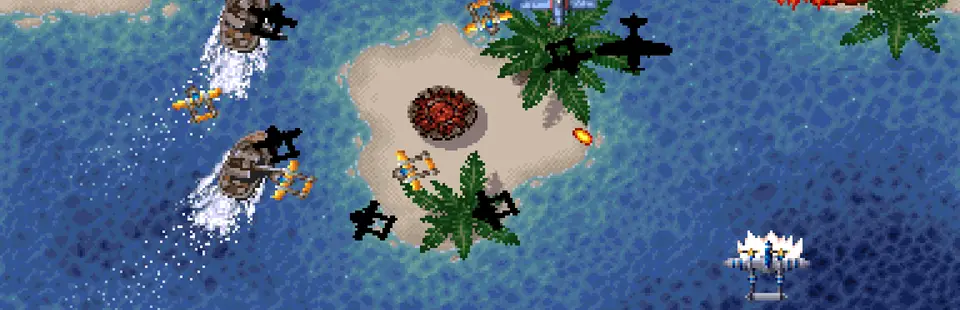
A native PC port of 1944: The Loop Master, the 2000 Capcom arcade vertical-scrolling shooter developed by Raizing (Eighting) and published by Capcom for the CP System II board. Its 68000 and Z80 programs are translated ahead of time into C++ by cps2recomp, and run on a small machine written for it — no emulator, and no game data in this repository.
Two players fly together as the P-38 Lightning or the A6M Zero through fifteen stages of WWII, with the series' charge-and-overheat shot and side fighters. This is a work in progress.
The port reads your own 1944: The Loop Master ROM set (the MAME set 1944,
Europe 000620) — nothing else is needed, and the set's key is used on the fly,
as the board does.
Not affiliated with or endorsed by Capcom.
Features
With every feature off the port runs exactly as the board does. From the toolkit (no game-specific work):
- The launcher: choose the ROM set (checked file by file by CRC-32), set the controls, Play.
- The in-game menu (Esc or
F1; a stick's click, or Start+Select): save states (nine slots), Reset, Insert coin, Player 2 joins, Quit game. - Stop, step, slow (
P,O,-/=). - Run-ahead and the Display options (scaling, picture shape, window size, full screen).
- Every key and button remappable, for each player.
--list-features prints the whole list. The game's own features (free play, cheats, a practice mode)
are still to come; each will read the game's memory and be recorded, with how it was found, in
games/1944/PROGRESS.md.
Ready-made builds are on the Releases page: a Windows zip, and for the Steam Deck and other Linux a self-contained AppImage (or a tarball where there is no FUSE). They carry no game data — bring your own ROM set. tools/release/README.md says how each one is made, and why the Linux ones are built on an old glibc.
Layout
| Path | What |
|---|---|
cps2recomp/ | A copy of the toolkit (v0.3.0), made by its tools/sync-toolkit.sh. Never change it here. |
games/1944/game.cfg | The ROM set's files and CRC-32s, the launcher's words, and the game's features. |
games/1944/src/ | The game's own C++: the optional features on top of the board. Empty for now. |
games/1944/PROGRESS.md | The game's memory as it is found, and how each address was found. |
ROADMAP.md | The features still to build and what each needs. |
tools/release/ | How the release archives are made: windows.sh, linux.sh, and the icon's drawing script. |
rom/ | Your ROM set: a folder of its files or the set's zip. Not committed. |
build/, work/ | Build output and generated code. Not committed. |
Prerequisites (MSYS2, MinGW64)
Run all commands from an MSYS2 MinGW64 shell (so gcc/g++, SDL3 and zlib are found). Install
what is missing once:
pacman -S --needed base-devel make git diffutils \
  mingw-w64-x86_64-toolchain mingw-w64-x86_64-cmake mingw-w64-x86_64-ninja \
  mingw-w64-x86_64-SDL3 mingw-w64-x86_64-zlib
Python 3 comes with MSYS2. CMake must be on PATH (which cmake must succeed); the MinGW64 package
above puts it in /mingw64/bin. make check also needs git (the repository must be a git working
tree, since check-common asks git for the top level) and diffutils (for cmp).
The ROM set
ROM points at a folder holding the set's files or at the set's zip. The default is rom, so put the
set's zip at rom/1944.zip (or the loose files in rom/). Files inside a zip are found by CRC-32,
whatever they are named, so they may sit in a subfolder. The set is only read, never changed.
The set this port is made from is MAME's 1944 (Europe 000620); games/1944/game.cfg lists its files
and checksums, and games/1944/PROGRESS.md says how it was told apart from the other revisions.
Only this revision is accepted: the port is translated from its program, and the game's features
will use addresses found in it.
Building
make            # translate the game's code to C++ and link build/1944/1944.exe
make launcher   # build the launcher: build/1944/1944-launcher.exe
make reads the board's program out of the ROM set (above) and translates it, so the set must be in
place first. A fresh tree also needs make explore once, because it starts out knowing almost none of
the game's code:
make explore    # find the game's code by made-up play, in rounds (once, about ten minutes)
make            # translate again, now that the code is known
make explore plays the game headless with made-up input across several runs, records every place the
code was reached by a computed jump, and translates what it found before the next round. It inserts
coins and presses Start by itself, so it reaches real games with no hand. Its progress is in the final
run's log line, instructions had no translation — as low as possible is what you want.
Running it
The build makes two programs in build/1944/: the game, 1944.exe, and the launcher,
1944-launcher.exe. Keep them beside each other.
- The launcher is the way in for a player: choose the ROM set (every file checked by CRC-32), set the controls, choose features, Play. Where the set is kept is remembered in the launcher's own folder and reused next time.
- Double-clicking
1944.exestarts the launcher beside it — straight into the game if a ROM set was chosen before, otherwise at the launcher's first page. - From a shell:
make runruns the port windowed, withrom/and the settings file the Makefile names; pass options through withARGS=, e.g.make run ARGS=--fullscreen. A game is started with a coin (Insert coin in the menu) or a free-play switch once the game's own features exist.
Feature choices come from work/1944/settings.ini; the eeprom and the save states (state0.bin …) sit
beside it. --help lists every option (--headless, --frames, --movie, --poke, --trace,
--dump-ram, --list-features, --cpu, --sound, …).
On Windows the two programs need the MinGW runtime beside them — SDL3.dll, zlib1.dll,
libstdc++-6.dll, libgcc_s_seh-1.dll, libwinpthread-1.dll. They come from MSYS2 and live in
/mingw64/bin. make copies them into build/1944/ (the deps target, which all runs after port;
make deps on its own does it too), so the folder can be double-clicked or run from any shell. Starting
the programs from an MSYS2 MinGW64 shell works as well, because that shell has /mingw64/bin on
PATH.
Troubleshooting
- "SDL3.dll was not found", or "The procedure entry point … could not be located in the dynamic link
library" — the runtime DLLs are missing from beside the programs, or an older one from another
toolchain is being picked up. Run
make deps, which copies the ones this build needs out of/mingw64/bin; or launch from an MSYS2 MinGW64 shell. Do not copy DLLs in from another project's build folder. cmake: command not found— installmingw-w64-x86_64-cmake(Prerequisites); it lands in/mingw64/bin, which the MinGW64 shell has onPATH.- The launcher refuses the ROM set — it checks every file by CRC-32. This port wants MAME's
1944(Europe 000620); other regions and revisions are refused on purpose. - Slow, or the log reports instructions left to the interpreter — run
make exploreonce, thenmakeagain. - No sound — the sound program runs like the rest of the game; check the launcher's Sound row and that
the set has its
sound_programfile (nff.01).
Checking
make check          # translated code against the interpreter, by state hash; two runs alike
make check-blocks   # every translated block beside the interpreter (registers, cycles, writes)
make check-toolkit  # cps2recomp/ is what its tools/sync-toolkit.sh recorded
make check-common   # recomp-common/ is what its tools/sync-common.sh recorded
See cps2recomp/build.mk for the full list of targets.
Comentarios (0)
Inicia sesión para dejar un comentario.
Sé el primero en comentar sobre este juego.